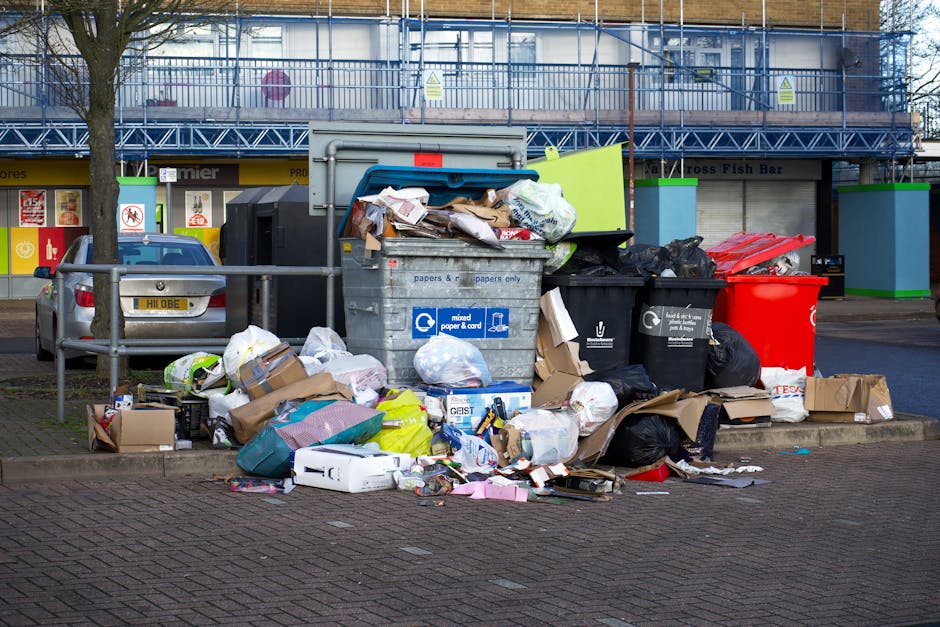
Avoid hidden costs in Peckham rubbish clearance quotes
If you have ever compared rubbish clearance prices and thought, "That looks fair enough," only to face surprise charges later, you are not alone. The easiest way to avoid hidden costs in Peckham rubbish clearance quotes is to know exactly what should be included, what should trigger extra fees, and which details need to be confirmed before anyone arrives. In Peckham, where homes, flats, shop units and renovation jobs can all throw up very different clearance needs, the quote matters as much as the collection itself.
This guide breaks the whole thing down in plain English. You will see how quotes are usually built, where the sneaky extras creep in, and how to ask the right questions without sounding awkward. Truth be told, a good clearance company should welcome those questions.
Table of Contents
- Why hidden charges matter
- How a rubbish clearance quote works
- Benefits of getting a transparent quote
- Who should care about quote clarity
- Step-by-step way to check for extra costs
- Expert tips for cleaner pricing
- Common mistakes people make
- Tools, resources and useful pages
- Compliance and best practice
- Comparison of quote methods
- Real-world example
- Practical checklist
- Conclusion
- Frequently asked questions
Why Avoid hidden costs in Peckham rubbish clearance quotes Matters
Hidden costs turn a tidy plan into a messy one. You may start with a simple job in a Peckham flat or a small office clearance, then suddenly there is a stair fee, a loading fee, a congestion-related surcharge, an extra charge for bulky items, or a price jump because the waste was "heavier than expected". Sometimes the reason is legitimate. Sometimes it is not especially clear. Either way, it is your money.
That is why quote transparency matters so much. A rubbish clearance quote should help you make a confident decision, not force you to decode the fine print at 7:30 in the evening while the hallway is full of bagged junk and one very stubborn broken wardrobe. Let's face it, nobody wants to negotiate when the van has already pulled up.
Peckham also brings its own practical quirks. Parking can be tight. Access can be awkward. Some properties are up several flights of stairs. Jobs can involve mixed waste, furniture, appliances, or builder's rubble. All of that can affect cost, but only if it is properly discussed up front.
Expert summary: The best way to control clearance spend is not to chase the cheapest headline number. It is to compare like for like, confirm what is included, and make sure the company has asked enough questions before quoting.
How Avoid hidden costs in Peckham rubbish clearance quotes Works
A proper rubbish clearance quote usually begins with a description of the waste, the access conditions, the likely time required, and how much loading is involved. For larger or less straightforward jobs, a company may need photos or a site visit. That is normal. In fact, it is often the only way to avoid an estimate that is wildly off target.
The quote should ideally explain the price basis. Is it by volume, by item, by load size, by labour time, or a blend of those? If you are clearing a mixed load, the answer matters. A few bags of garden waste behave very differently from a broken sofa, a fridge, and a pile of damp plasterboard. Same van, very different job.
Some companies also split the cost into parts: labour, transport, disposal, and special handling. Others offer one all-in figure. Either approach can be fine, as long as the scope is clear. What you are looking for is consistency, not jargon.
A useful quote should also say what would change the price. For example:
- more waste than described
- restricted access or no parking
- heavy lifting up stairs
- hazardous or specialist items
- additional labour for sorting or dismantling
If a company won't explain those conditions in straightforward language, that is a small warning bell. Not a huge drama, but worth noticing.
For people arranging a full property clearance, it can help to look at related services such as house clearance, home clearance, or flat clearance to understand how different jobs are typically scoped. If you are disposing of awkward furniture, the pages for furniture clearance and furniture disposal may also help you think through what needs declaring.
Key Benefits and Practical Advantages
Getting a clear quote is not just about saving money on the day. It changes the whole experience of the job. A transparent estimate gives you room to compare providers properly and choose based on value, not guesswork.
- Better budget control: you can plan around the full cost rather than a teaser price.
- Fewer arguments on arrival: expectations are already agreed.
- Faster booking: there is less back-and-forth once the scope is clear.
- Less risk of accidental overspend: small add-ons do not quietly pile up.
- More trust: a clear quote usually signals a clearer service overall.
There is another advantage people often miss. Transparent quoting tends to reveal whether a clearance company understands the job properly. If they ask sensible questions about access, waste type, timing, and parking, they are more likely to turn up prepared. That saves hassle later. And in rubbish clearance, hassle often costs money, even if it does not appear as a line item.
For some jobs, such as builders waste clearance or office clearance, the best outcome is not simply the lowest price. It is the quote that best reflects the actual job, without the awkward "we'll need to revise that once we arrive" conversation.
Who This Is For and When It Makes Sense
This matters for just about anyone arranging waste removal in Peckham, but it is especially useful if your job is more than a few bin bags. If you are moving out, clearing a rental, renovating, shutting down an office, or dealing with a garage or loft full of forgotten stuff, quote clarity matters a lot.
You should be extra careful if your waste includes:
- large furniture or mattresses
- white goods or appliances
- mixed household waste
- trade waste or builder's rubble
- items that may need special handling
People often assume a "quick clear" means a simple fixed price. Sometimes yes. Often no. For example, a small pile of rubbish in a front garden is one thing; the same pile at the top of a narrow stairwell is another. The job changes, and so can the cost.
It is also worth paying attention if you are comparing services for a business. Commercial waste arrangements can be priced differently from one-off domestic collections, and the scope needs to be tighter. If you run a shop, studio, or shared workspace, looking at business waste removal alongside your quote checks can help you separate regular waste needs from occasional clearance work.
Step-by-Step Guidance
Here is a practical process you can use before you accept any clearance quote. Nothing fancy. Just a simple way to stay one step ahead.
- Describe the waste clearly. List the main items, rough quantity, and whether they are loose, bagged, stacked, or broken down.
- Explain access conditions. Mention stairs, lifts, parking distance, narrow hallways, locked gates, or restricted entry times.
- Ask what is included. Confirm labour, loading, transport, disposal, and VAT if applicable.
- Ask what could cost extra. Heavy items, special waste, extra time, or difficult access should be explained in advance.
- Request a written quote. A text or email summary is much easier to compare than a phone promise. Much easier.
- Check item-specific charges. Appliances, mattresses, sofas, and hazardous items may be handled differently.
- Confirm the collection window. Time delays can matter if parking or building access is limited.
- Keep a copy of the agreement. If there is a dispute later, you will be glad you did.
If you are unsure whether your items are straightforward, it can help to look at relevant service information first. For example, the pages for mattress and sofa disposal, fridge and appliance removal, and garage clearance can prompt the right questions before you ask for pricing.
One small but very useful habit: send photos from the doorway, not just close-ups of a single item. A photo that shows the surrounding space can reveal access issues that affect pricing. That little bit of honesty up front usually saves everyone time.
Expert Tips for Better Results
Here is where experience really pays off. Most hidden costs are avoidable if you know which details matter most.
- Ask for an all-in figure where possible. It does not need to be the cheapest, just the clearest.
- Be honest about volume. "A small van load" means different things to different people, so use photos or dimensions where you can.
- Separate special items early. Hazardous waste, appliances, and certain bulky items may need different handling.
- Check whether dismantling is included. Flat-pack furniture that still needs taking apart can change the labour cost.
- Confirm parking reality. In Peckham, a van's access point can make a real difference to the final price.
- Do not assume stair carries are free. Sometimes they are included. Sometimes not. Ask.
Another practical tip: if you are clearing out a loft, shed, or storage space, mention the condition of the items. Wet, mouldy, broken, or heavily contaminated waste can take longer to load and may need different disposal arrangements. Nobody enjoys saying this, but an old damp sofa is not the same as a dry one.
If sustainability matters to you, ask how reusable or recyclable items are handled. A transparent company should be comfortable discussing responsible disposal. You can also review a provider's approach to recycling and sustainability so you know whether the quote reflects more than just dumping everything in a heap and hoping for the best.
Common Mistakes to Avoid
Most expensive surprises come from a handful of predictable mistakes. Easy to make, annoying to fix.
1. Focusing only on the headline price
A low starting quote can look brilliant until the extras appear. If one company is much cheaper than the others, ask why. A bargain is only a bargain if it covers the same work.
2. Forgetting to mention awkward access
Top-floor flats, basement rooms, tight staircases, and long carries from the van all matter. If you leave that out, the quote may be incomplete.
3. Mixing different waste types without saying so
Builders waste, garden waste, household items, appliances, and furniture can all affect disposal costs differently. A mixed load needs a mixed description.
4. Assuming "one price" means everything is included
Some quotes are genuinely all-inclusive. Others are not. Ask the question directly: "What could change this price on the day?"
5. Not checking policy pages or service terms
It sounds boring. It is boring, to be fair. But pages like terms and conditions, pricing and quotes, and payment and security can tell you a lot about how a company handles revisions, deposits, and card payments.
If a quote leaves you more confused than reassured, pause. A rushed yes can be expensive later. Better to ask once more than pay twice.
Tools, Resources and Recommendations
You do not need specialist software to manage rubbish clearance pricing. A phone, a notes app, and a bit of organisation will get you most of the way there. Still, a few simple tools make the process cleaner.
- Photo set: take pictures of every room, access point, and awkward item.
- Item list: write down what is being removed, including anything heavy or fragile.
- Measurement rough-check: if a load is large, estimate how much floor space it fills.
- Question list: keep the same questions for every company so you can compare fairly.
- Booking confirmation: save the final agreed price, collection time, and inclusions.
For larger or more specialised jobs, it helps to review the relevant service page first, especially if your load includes items that need particular care. For example, hazardous waste disposal should be treated very differently from ordinary household clearance. Likewise, confidential shredding is about secure handling, not just getting rid of paper.
If you want to organise the work in advance, the book online page is a sensible starting point. And if you need to speak to someone before making a decision, the contact us page is there for that exact reason.
Law, Compliance, Standards, or Best Practice
Rubbish clearance is not just a pricing question. It also has a compliance side, especially when waste includes appliances, mixed materials, commercial waste, or items that could be classed as hazardous. You do not need to become a compliance expert, but you should expect the company to handle waste responsibly and to explain what happens to it.
In the UK, waste carriers are generally expected to manage waste lawfully, transport it properly, and ensure it goes to an appropriate facility. For you as the customer, the practical rule is simple: choose a company that is clear about disposal practices, insurance, and safety. If they cannot explain where the waste goes in plain terms, that is not ideal.
It is also sensible to consider whether the service has a clear approach to health and safety. Heavy lifting, broken furniture, sharp edges, and awkward access can all create risk. A reputable provider should have a sensible process for managing those risks. You can review health and safety policy and insurance and safety information before booking.
Where responsibility matters most, there is usually no need for drama. Just clear communication, sensible paperwork, and a company that knows the difference between a quick quote and a careless one.
Options, Methods, or Comparison Table
Not every clearance quote works the same way. Here is a simple comparison to help you think about what you are being offered.
| Quote method | What it means | Best for | Watch out for |
|---|---|---|---|
| Fixed all-in quote | One agreed price for the job | Clear, well-described loads | Make sure the scope is exact |
| Estimate with adjustments | Price may change after viewing the waste | Jobs with uncertain volume or access | Ask what triggers a change |
| Item-based pricing | Each item or category is priced separately | Single bulky items or mixed furniture | Check whether labour is included |
| Volume-based pricing | Price depends on how much van space is used | General rubbish and mixed loads | Ask how partial loads are measured |
For domestic customers, a fixed quote is often the easiest to understand. For trickier jobs, a site visit or detailed photo review may be fairer. For example, a loft packed with old boxes, a cracked chair, and some random bits of timber is not the same as removing three identical chairs from a ground-floor room. Obvious, but easy to miss in the moment.
If you are comparing methods, the page on waste removal may help you see how broader collections differ from item-specific services. And if furniture is your main issue, the choices around mattress and sofa disposal or larger furniture removal become easier to compare when you know what the pricing model is.
Case Study or Real-World Example
Imagine a Peckham resident clearing a two-bedroom flat after a move. The initial message says: "a few bags, one wardrobe, some shelf units, and an old mattress". Reasonable enough. But once the team arrives, there is also a broken desk, a dismantled bed frame, two extra boxes of mixed waste, and the only parking space is several doors away. That is where a vague quote can go off track.
Now compare that with a better approach. The customer sends photos of every room, mentions the stairs, confirms the mattress, notes that the wardrobe is already dismantled, and asks whether the quote includes labour and disposal. The company can then price the job much more accurately. No drama. No surprise add-ons. Just a job done properly, with everyone on the same page.
That second version is not glamorous, but it works. In practice, most quote problems come from missing information, not malicious intent. The difference is how the situation is handled before collection day. A clear photo and a clear question can save an afternoon of frustration.
Practical Checklist
Use this checklist before you accept any Peckham rubbish clearance quote.
- Have you described every item, not just the obvious ones?
- Have you explained access, stairs, parking, and loading distance?
- Have you asked whether labour, disposal, and transport are included?
- Have you confirmed whether VAT or other taxes apply?
- Have you asked what would trigger an extra charge?
- Have you separated specialist items such as fridges, mattresses, or hazardous waste?
- Have you requested the price in writing?
- Have you checked payment terms before booking?
- Have you compared at least two quotes on the same basis?
- Do the quote and the service description feel clear, calm, and consistent?
If the answer to any of those is "not yet", take another minute. Honestly, that minute can save you a fair bit of money.
Conclusion
To avoid hidden costs in Peckham rubbish clearance quotes, the goal is simple: make the job easy to understand before anyone turns up. Be precise about the waste. Be honest about access. Ask what is included. And do not be shy about requesting a written breakdown if something feels vague.
The best quote is not always the lowest one. It is the one that reflects the real job, gives you confidence, and leaves no nasty surprises behind. That kind of clarity is worth a lot when you are standing in a hallway full of boxes and the kettle is boiling in the background.
Get a free quote today and see how much you can save.
And if you are still weighing up your options, take your time. A clear, careful choice now usually makes the whole clearance feel lighter later. A little calm goes a long way.
Frequently Asked Questions
What are the most common hidden costs in rubbish clearance quotes?
The most common extras are charges for stairs, difficult access, heavier-than-expected waste, special items like appliances, and additional labour if the job takes longer than described.
How can I tell if a Peckham rubbish clearance quote is genuine?
A genuine quote should clearly explain what is included, what may change the price, and how the waste will be handled. If it is vague, ask for more detail before accepting.
Should I choose the cheapest quote?
Not automatically. The cheapest quote may leave out labour, disposal, or access issues. Compare quotes on the same basis so you are looking at real value, not just a low headline number.
Do I need to send photos before getting a quote?
Photos are very helpful, especially for mixed loads, bulky furniture, loft clearances, or places with awkward access. They make the estimate much more accurate.
Can a quote change on the day of collection?
Yes, if the actual job is different from the description you gave. That is why it helps to be precise about volume, access, and item type from the start.
Are mattresses, sofas and fridges priced differently?
Often, yes. Items like mattresses, sofas, and fridges can require different handling or disposal arrangements, so it is sensible to mention them separately when requesting a quote.
What should be included in a rubbish clearance price?
Ideally, the price should cover labour, loading, transport, and disposal. Always ask whether VAT or any other charges are included as well.
Is a site visit better than a phone quote?
For straightforward jobs, a phone or photo quote may be enough. For large, mixed, or awkward clearances, a site visit or a very detailed photo review can reduce the risk of surprises.
What if I have hazardous waste or unusual items?
Tell the company straight away. Hazardous waste and specialist items should never be treated like normal rubbish, and they may need separate handling. It is better to flag them early.
How do I compare clearance quotes fairly?
Use the same description for each company, ask the same questions, and compare the inclusions side by side. That keeps things fair and makes hidden extras easier to spot.
What if the company adds fees I was never told about?
Refer back to the written quote or booking confirmation first. If the charge was not explained in advance, ask for clarification through the company's complaints process if needed.
Where can I check a company's terms before booking?
Useful places to review include terms and conditions, pricing and quotes, and payment and security. They can help you understand how the company works before you commit.
Does recycling affect the quote?
It can. Some companies price based on sorting, reuse potential, and disposal routes. If sustainability matters to you, ask how materials are handled and review their approach to recycling and sustainability.
What is the safest next step if I am unsure?
Gather a few photos, write a short item list, note the access details, and ask for a written quote. That one simple habit usually clears up most pricing confusion before it starts.